NASA-SpaceX Dragon To Return With Cancer, Bacteria Research From ISS
The spacecraft is carrying tumour organoids, 3D-bioprinted blood vessels and microbial samples that could help scientists advance cancer treatment, cardiovascular research and the fight against antibiotic resistance.
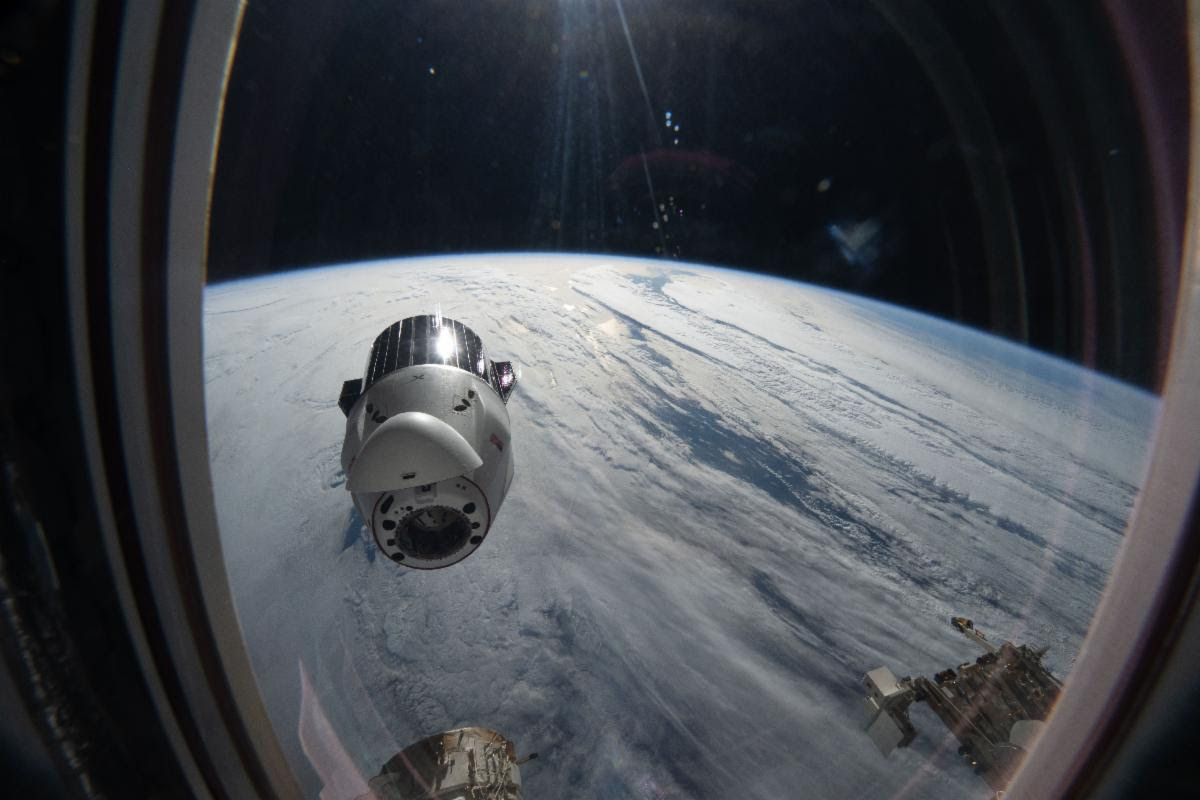
WASHINGTON: Frozen tumour organoids, artificially constructed blood vessels, microbial samples linked to antibiotic-resistance research and a lighting system tested for astronaut sleep are among the scientific cargo returning to Earth aboard a SpaceX Dragon spacecraft departing the International Space Station on Wednesday.
The returning material represents several strands of research being conducted in microgravity, where scientists can examine how biological systems respond to conditions substantially different from those on Earth. Researchers will analyse the samples after recovery to assess their implications for medicine, human health and future space exploration.
Among the most significant experiments is a 3D-bioprinted blood vessel construct used to investigate vascular ageing and cardiovascular disease.
Scientists are examining how blood-vessel structures respond to the space environment, research that could contribute to a better understanding of changes in the human circulatory system.
The spacecraft is also carrying frozen tumour organoids treated aboard the station.
These miniature laboratory-grown models of tumour tissue could help researchers investigate cancer-cell behaviour and identify approaches to improving treatment and personalised medicine.
Another set of returning samples involves microorganisms exposed to space conditions. Their analysis is expected to help scientists understand how antibiotic-resistant bacteria survive, adapt and evolve, an important area of research as drug resistance continues to challenge healthcare systems worldwide.
The cargo also includes a specialised lighting system that has spent more than three years aboard the station. Researchers tested its potential to support astronauts’ sleep and well-being by helping regulate lighting conditions during prolonged missions.
The spacecraft arrived at the station on October 15 after launching two days earlier aboard a Falcon 9 rocket from Space Launch Complex 40 at Cape Canaveral Space Force Station in Florida.
Beyond the biological experiments, Dragon is returning equipment that will undergo examination on Earth, adding to the scientific and operational value of the mission.
The return also highlights the importance of the International Space Station’s multinational research programme, involving NASA and its international partners, including the European Space Agency, Japan’s JAXA, Canada’s space agency and Russia’s Roscosmos.
For more than 26 years, humans have lived and worked continuously aboard the orbital laboratory.
Its research supports NASA’s preparations for longer missions to the Moon and Mars under the Artemis programme.
The returning experiments will now move from an orbital research environment to laboratories on Earth, where scientists can conduct further analysis and determine how their findings might translate into advances in healthcare and human spaceflight.
Explore these topics
- 3D bioprinting
- antibiotic resistance
- Artemis programme
- bacteria in space
- blood vessel research
- Cancer Research
- cardiovascular disease
- Dragon spacecraft
- International Space Station
- ISS
- ISS research
- microgravity research
- NASA
- NASA SpaceX mission
- Rohan Dua
- Space Exploration
- Space Medicine
- SpaceX CRS-35
- SpaceX Dragon
- The Global Envoy
- tumour organoids