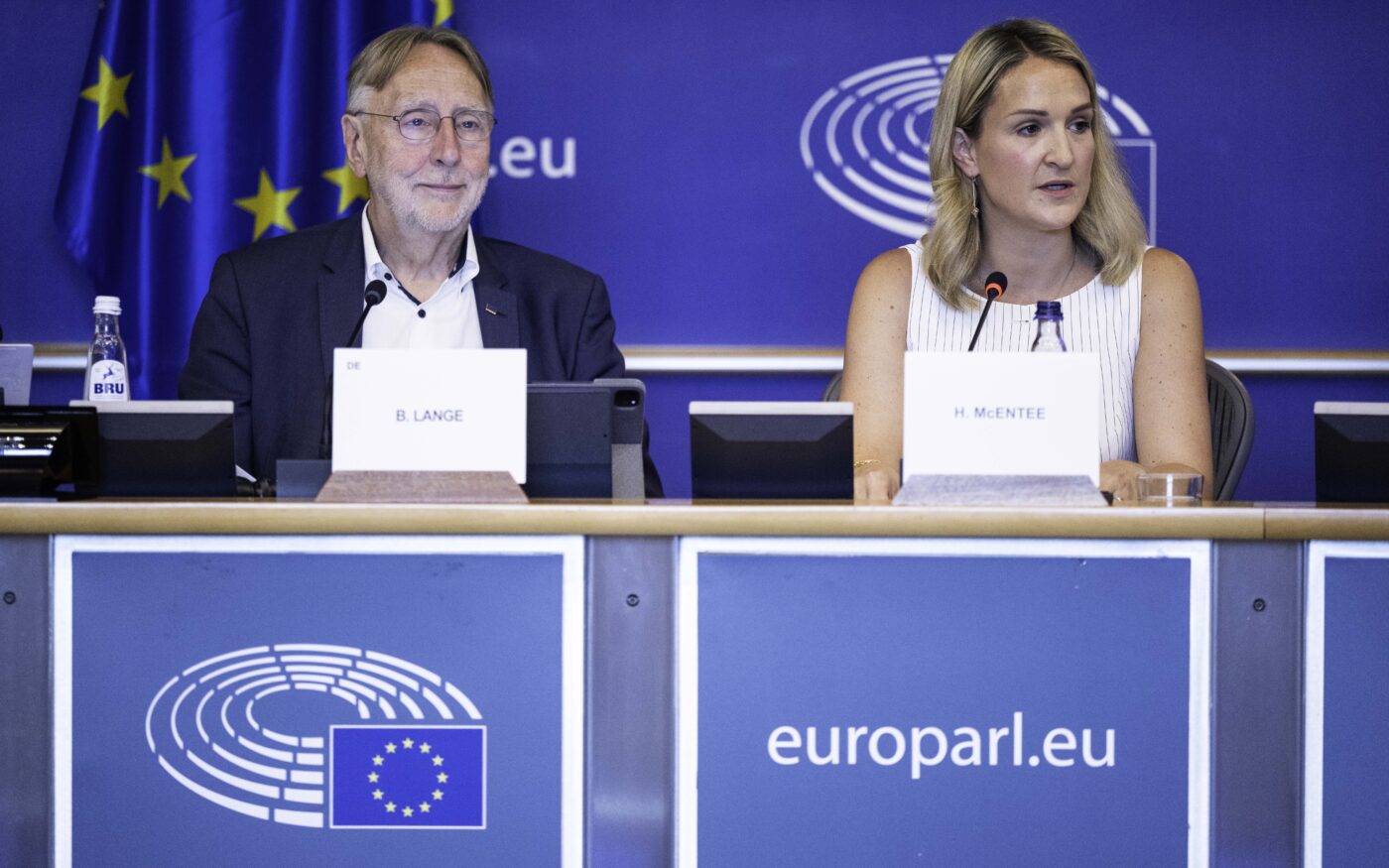
DUBLIN: The European Union is seeking to preserve its $1.8 trillion transatlantic trade relationship while expanding ties with other global partners, as trade tensions and geopolitical uncertainty push the bloc to reassess its economic dependencies.
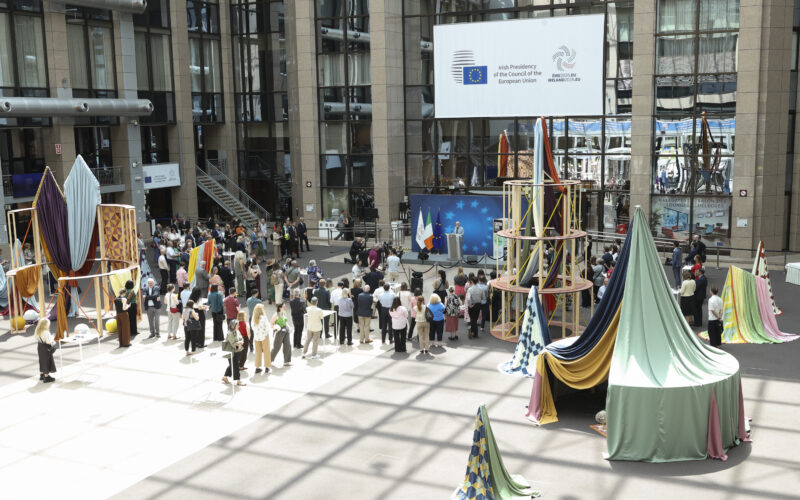
Ireland’s Foreign Affairs and Trade Minister Helen McEntee hosted EU trade ministers in Dublin on October 22-23 for talks on trade and investment, including relations with the United States, China and emerging partners across Asia and the Middle East.
The informal meeting of the EU Foreign Affairs Council on Trade, held during Ireland’s presidency of the Council of the European Union, brought together ministers and European Commissioner for Trade Maroš Šefčovič to discuss the bloc’s trade priorities.
“Last week’s European Council meeting highlighted that there is still significant work to do to address current trade challenges. However, the progress made represents an important step forward in supporting a constructive and stable trade and investment relationship.”
McEntee said the EU’s relationship with the United States remained a central priority for Ireland’s presidency, with ministers discussing ways to maintain a predictable trading environment across the Atlantic.
The two-way trade relationship is valued at €1.8 trillion annually, making it the world’s most valuable of its kind, according to the Irish government.
“We had the chance to consider fully our trade and investment relations with the US, and I am glad there was broad consensus in the room that engagement and dialogue offer the best way forward to address the challenges facing both the EU and US. I look forward to continuing this dialogue when the FAC trade ministers meet again in Brussels at the end of November.”
The discussions also focused on reducing reliance on individual markets by strengthening trade relationships with other partners. Ministers examined negotiations on preferential trade agreements with the Philippines, Malaysia, Thailand and the United Arab Emirates, as well as the scope for broader, region-to-region arrangements.
China was also on the agenda, with officials exchanging views on bilateral trade and investment ties and the outcomes of the EU-China Trade and Investment Consultation Mechanism.
Canada ties and trade diversification
The Dublin meeting was preceded by a panel discussion involving McEntee, Šefčovič and Canada’s Minister for International Trade, Maninder Sidhu, on the benefits of EU trade agreements, including the Comprehensive Economic and Trade Agreement (CETA).
The agreement, signed in 2016, marks its 10th anniversary this year. Ireland said it had helped transform trade between the EU and Canada, and called for further expansion of the relationship ahead of an upcoming EU-Canada summit.
“In an era of geopolitical instability and global trade tensions, economic relationships built on predictability, transparency and mutual benefit, such as the one we enjoy with Canada, are more important than ever.
“Agreements like CETA not only have the potential to open new markets, improve supply chain resilience, and create high-value-added jobs, but also are one of our one of greatest levers in strengthening our global, regional, and bilateral relations. In the ten years since it was signed – CETA has been a step change in EU and Irish trade with Canada, and I want to see it grow even further.”
At the event, McEntee announced that she had commissioned the Organisation for Economic Co-operation and Development (OECD) to review women’s participation in Ireland’s international trade.
She said the review would examine barriers facing women in the global economy and help identify policies to support their participation in international commerce.
“At this event, I was really impressed by the strong panel of women business leaders who are using CETA and other trade agreements to expand their businesses. There is extraordinary potential for trade promotion and trade policies to support women’s economic empowerment. Where barriers to this goal of empowerments are identified, I want to develop the right policies to overcome them. That is why I am commissioning the OECD to review how women Irish women participate in the global economy.”
Life sciences and economic security
McEntee also hosted a strategic dialogue on life sciences, bringing together Šefčovič, trade ministers from EU countries with significant pharmaceutical and medical-device industries, and representatives of the sector.
The Irish government said pharmaceuticals and medical technology account for 10% of EU gross domestic product, making the sector important to the bloc’s economic resilience and competitiveness.
The meeting sought to encourage dialogue between governments and industry as Europe works to strengthen supply chains and maintain a robust life-sciences ecosystem.
McEntee is due to chair the next EU Foreign Affairs Council meeting on trade in Brussels on November 30, where ministers are expected to continue discussions on diversifying trade, improving competitiveness and strengthening the bloc’s economic security.
“I look forward to taking the positive momentum we have generated in Dublin into our next meeting, where the focus will remain on advancing Europe’s diversification priorities and supporting European competitiveness, resilience and economic security, to the benefit of all European citizens,” said McEntee