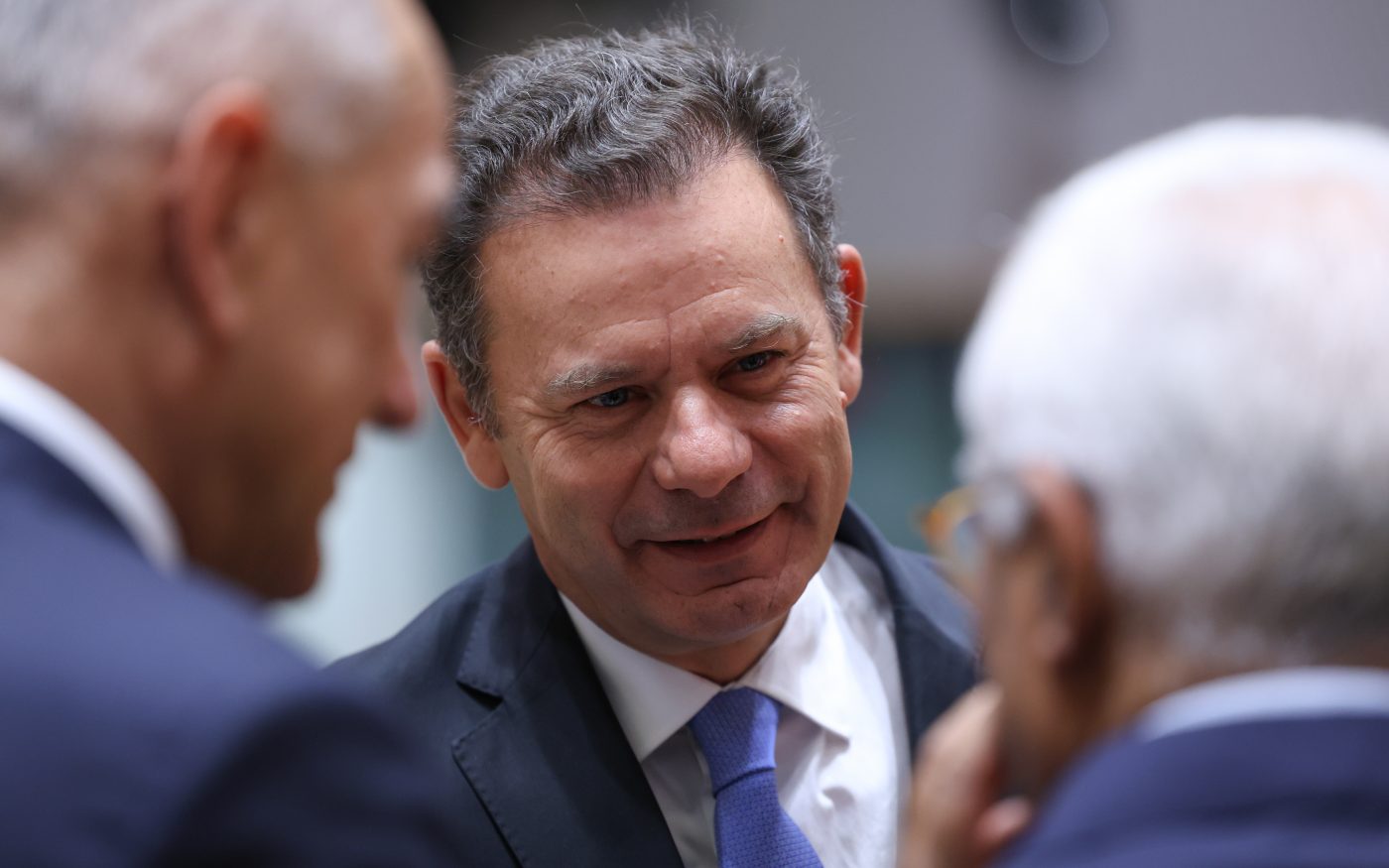
BRUSSELS: Portuguese Prime Minister Luís Montenegro criticised the US-Russia agreement to supply diesel, calling it “incoherent” and “inconsequential” and warning that it would do little to ease fuel prices while sending the wrong signal about Moscow’s war against Ukraine.
Montenegro said the arrangement announced by Washington would not provide a lasting solution to the energy price crisis, arguing that any additional availability of diesel would address shortages for only a few days.
The Global Envoy’s Rohan Dua was present at EU Council’s two day Oct 15-16 summit in Brussels.
“What was announced by the US does not correspond to a consistent and coherent solution,” Montenegro said on the sidelines of the European Council summit in Brussels.
“First of all, it is not consistent because the deal will not solve the problem of fuel prices,” he said. “And it has a limitation: in terms of product availability, diesel in particular, does not solve the issue for more than a few short days. Therefore, it is not consequential.”
He also criticised the agreement on geopolitical grounds, saying it risked weakening international efforts to pressure Russia over its invasion of Ukraine.
“And it is also not coherent because it sends the wrong signal regarding support for Russia’s aggression against Ukraine,” he said.
The agreement comes as governments grapple with rising energy costs linked to conflict in the Middle East and disruption to global fuel markets. US President Donald Trump announced an arrangement with Russian President Vladimir Putin to allow additional Russian diesel supplies onto the market, presenting it as a way to ease fuel prices.
The agreement has drawn criticism from Ukraine and European leaders concerned about its implications for sanctions and support for Kyiv.
Montenegro said the priority should instead be effective diplomacy to halt the escalation in fuel prices and address the conflicts driving market instability.
“We need an intervention that is diplomatically effective to halt this increase in fuel prices, which is absurd and senseless, and affects everyone,” he said.
He added that Portugal had raised the issue in international forums, including the United Nations General Assembly and the MED9 group of southern European countries, and would continue pressing for action.
“This new development brings no positive consequence and is an incoherent signal that undermines what we must do to pressure Russia into contributing to a just and lasting peace for Ukraine,” Montenegro said.
The Portuguese leader said he had held talks with US Secretary of State Marco Rubio the previous week, with the aim of making a diplomatic resolution to the Middle East conflict a priority.
That, he argued, would help stabilise international oil markets and, in turn, fuel prices.
Montenegro’s comments underscore the tension facing European governments as they seek to contain the economic effects of geopolitical conflict without weakening pressure on Russia over Ukraine.