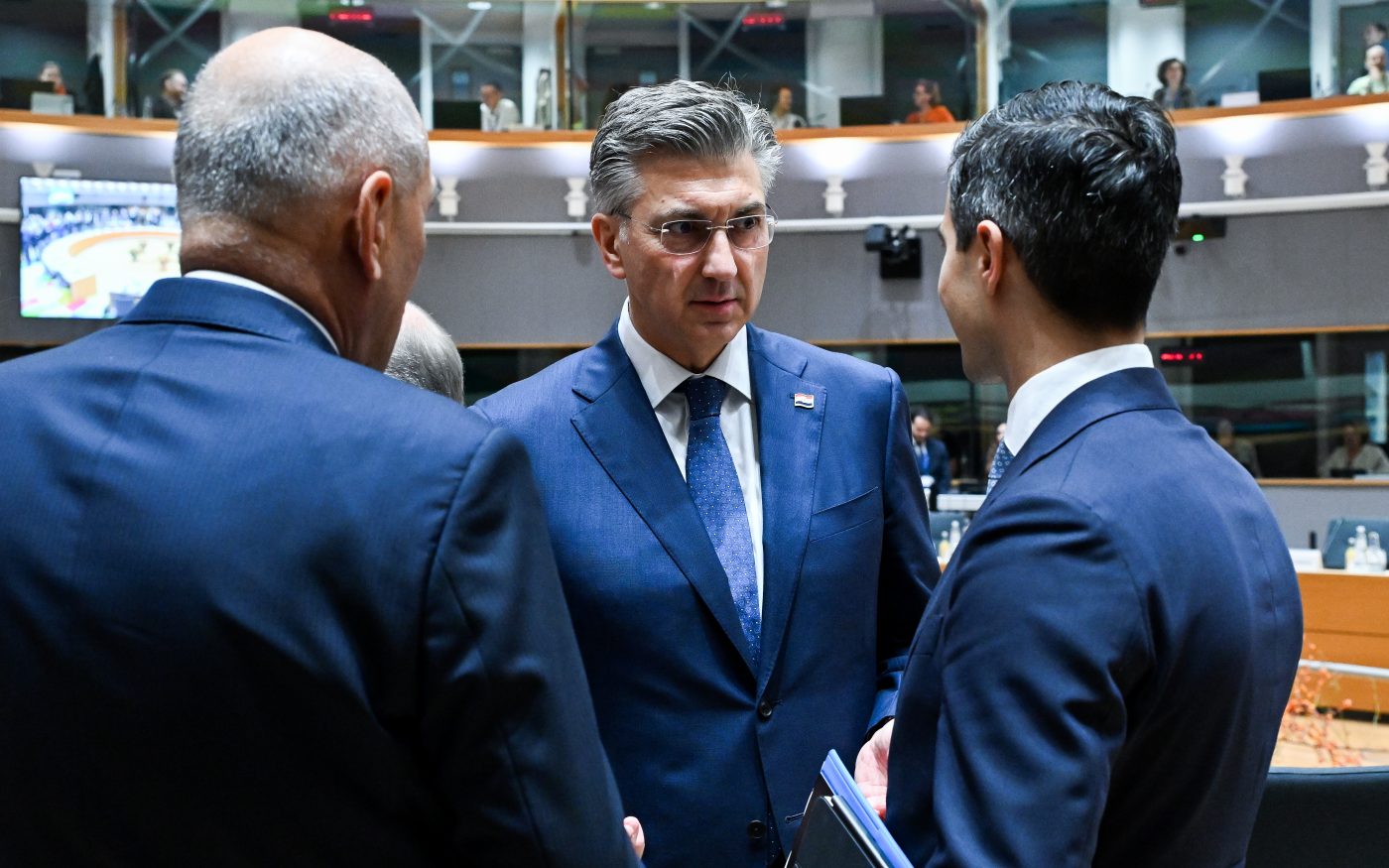
BRUSSELS: Croatian Prime Minister Andrej Plenković has welcomed the latest proposal for the European Union’s next long-term budget, saying it broadly meets Croatia’s expectations while insisting that cohesion funding and traditional EU policies must remain protected.
Speaking ahead of the European Council summit in Brussels, Plenković said the negotiating framework presented by Ireland, which holds the rotating EU Council presidency, represented progress because it reduced the overall volume of proposed spending while preserving a level of funding favourable to Croatia.
“For Croatia it is a favourable negotiation box and in accordance with expectations as to the overall volume of financial means that would be available in the 2028-2034 period,” he said.
Plenković described the summit as a step forward in negotiations over the Multiannual Financial Framework (MFF), the EU’s long-term budget covering 2028 to 2034.
But he cautioned that reaching an agreement by the end of the year remained uncertain, arguing that the substance of the deal mattered more than meeting an ambitious deadline.
“Success by the end of the year is a big question and to Croatia the content matters more than a tight schedule that opens political challenges,” he said.
Protecting cohesion and traditional policies
Croatia is seeking to preserve the EU’s traditional spending priorities, particularly cohesion policy, which supports economic development and reduces regional disparities among member states.
Plenković said Zagreb was working to protect its national interests while coordinating with other countries in the Friends of Cohesion group.
“We work in ways in which we keep our interests nationally and as friends of cohesion, thus want the traditional policies to remain entrenched,” he said.
He also called for a stronger European economy and greater global competitiveness, arguing that the EU should be able to play a more influential role internationally.
“But we also want a global Europe and a stronger competitiveness,” he said. “Europe should take its place in the world as it is an organisation that can do so.”
Plenković said the budget negotiations needed to strike a fair balance between revenue and expenditure, while recognising the concerns of net contributor countries that finance a larger share of the EU budget.
For Croatia, however, protecting cohesion funding remains central to the negotiations.
He said the bloc needed to reach a consensus while preserving the budget’s first pillar for cohesion countries and reducing the overall burden on its most advanced and strongest economies.
“As I see it today, at least today, we are pretty far from a consensus, a lot of tough negotiations need to happen now,” he said.
Elections could complicate negotiations
Plenković warned that national elections across several member states could complicate the negotiations, making a rigid deadline less important than reaching a sustainable agreement.
He pointed to upcoming political contests in Spain, France, Italy, Poland and Germany as factors that could affect national positions.
The challenge for EU leaders is to reconcile demands for more spending on defence and competitiveness with calls to maintain funding for agriculture and regional development.
Croatia’s position reflects the interests of countries that continue to rely on EU funding to support infrastructure, regional development and economic convergence.
Plenković said Croatia wanted a stronger Europe but argued that the next budget must protect the policies that have helped member states develop economically