ESA Advances Moon Ambitions with Nammo Engine Test
Nammo UK's successful hot-fire tests of the RELIANCE engine advance ESA's Argonaut lunar lander programme. The development highlights Europe's push to build independent propulsion and lunar delivery capabilities as competition for access to the Moon intensifies.
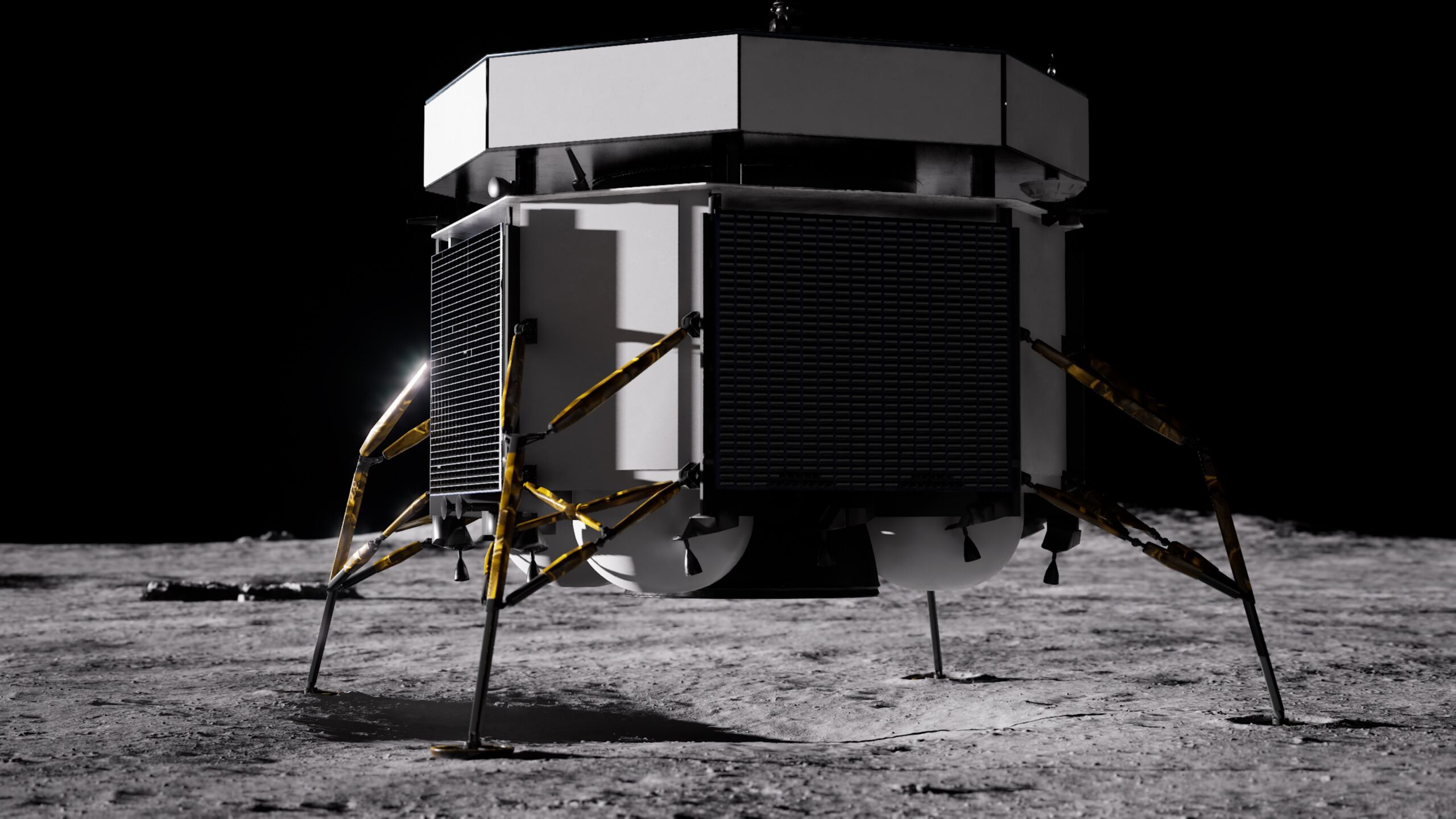
BREMEN: Europe’s ambition to become a more independent player in lunar exploration has moved a step closer to reality after British propulsion specialist Nammo UK successfully tested a prototype engine designed to power the European Space Agency’s future lunar lander.
The RELIANCE engine, capable of generating 6 kilonewtons of thrust, completed a hot-fire test campaign that demonstrated its ability to throttle between 50% and full power while maintaining combustion stability and efficiency, Nammo said at Space Tech Expo Europe in Bremen.
The Global Envoy‘s Rohan Dua has been invited to the three-day event.
The achievement addresses one of the central engineering challenges of a lunar landing: controlling a spacecraft’s descent as it approaches the surface, where variations in thrust can determine whether a lander touches down safely or loses control.
But the significance of the test extends beyond propulsion technology. For Europe, the Argonaut programme represents an effort to develop capabilities that would allow it to deliver cargo, infrastructure and scientific equipment to the Moon without relying entirely on the launch and landing systems of other space powers.
The European Space Agency’s Argonaut initiative is intended to provide Europe with independent access to the lunar surface while contributing to NASA’s Artemis programme. Its success will depend not only on the lander itself but also on the availability of propulsion, navigation, communications and other critical technologies developed and controlled within Europe.
A strategic capability, not just an engine
The RELIANCE programme illustrates how the competition for a sustained presence on the Moon is increasingly becoming a contest over industrial capabilities as much as scientific achievement.
The United States is advancing its Artemis programme, while China is pursuing an ambitious lunar exploration roadmap. Against this backdrop, European policymakers and space institutions face a question that goes beyond participation in individual missions: whether Europe can develop the technologies and industrial capacity needed to undertake increasingly complex lunar operations on its own terms.
A landing engine capable of varying thrust precisely is central to that ambition. Unlike conventional spacecraft propulsion, a lunar descent engine must regulate its output as the lander slows down, approaches the surface and adjusts its trajectory.
RELIANCE uses a pintle injector architecture, electrically driven centrifugal pumps and an integrated engine controller to achieve deep throttling. It runs on hypergolic propellants and draws on technological heritage from Nammo’s LEROS engine family.
The company describes it as the first electrically pump-fed, dual-propellant, regeneratively cooled engine using monomethylhydrazine (MMH) and mixed oxides of nitrogen (MON) to demonstrate deep-throttling capability through hot-fire testing.
The distinction is important: the latest results demonstrate a prototype’s performance under test conditions, not a flight-qualified engine or a completed lunar landing system.
“RELIANCE represented a significant technological step for Europe, offering the propulsion performance and throttling capability required for the lander’s descent system,” said Ludovic Duvet, ESA Argonaut Team Leader.
“Developed for the Argonaut Lunar Descent Element, the technology could also support future lunar return missions and other exploration scenarios, ” he added.
Duvet said the programme, led by Nammo UK and bringing together expertise from companies across Europe, demonstrated how European investment could generate strategic technologies with applications beyond a single mission.
From prototype to operational capability
The programme has also completed its Preliminary Design Review, an important engineering checkpoint that assesses whether a system’s design is sufficiently mature to proceed to the next stage of development.
Nammo said preparations were under way for the construction and testing of an Engineering Model in 2027. Further work will include testing engine-control logic, developing a dedicated risk-reduction model, refining manufacturing processes and conducting component-level tests before qualification activities.
“The successful hot-fire campaign demonstrated the company’s ability to develop propulsion systems for demanding exploration missions,” said Robert Selby, Vice President of Nammo Space.
“The focus would now shift to maturing the design, optimising performance and completing the qualification activities needed to bring RELIANCE into service over the next three years, ” he added.
That transition will be critical. A prototype engine that performs successfully in a controlled test environment must still demonstrate reliability, repeatability and the ability to withstand the conditions of an actual space mission.
For Europe, the challenge is therefore not simply to develop an engine that can land a spacecraft on the Moon. It is to establish an industrial supply chain and engineering capability that can support repeated missions, reduce dependence on external providers and sustain a long-term presence beyond Earth.
A propulsion heritage built in deep space
Nammo is drawing on an established record in spacecraft propulsion. Its LEROS 4 engine powered Firefly Aerospace’s Blue Ghost lunar lander, which successfully touched down on the Moon in March 2025. The mission demonstrated the company’s experience in supporting commercial lunar exploration.
Its LEROS 1b engine also served as the main propulsion system for NASA’s Juno spacecraft, which is studying Jupiter. In 2024, Nammo UK supplied the propulsion system for Astroscale’s ADRAS-J mission, which conducted rendezvous and proximity operations around space debris.
Those missions provide a technological foundation for RELIANCE, although the demands of a throttleable lunar descent engine differ from those of spacecraft engines used for orbital manoeuvres and deep-space propulsion.
The latest test offers Europe evidence that a key part of its future lunar landing architecture is progressing. Whether that progress translates into operational independence will depend on the engineering milestones still to come, the ability to coordinate Europe’s industrial partners and the long-term funding of its lunar ambitions.
For now, RELIANCE has passed an important test on Earth. Europe’s larger test, demonstrating that it can independently deliver payloads to the Moon, remains ahead.