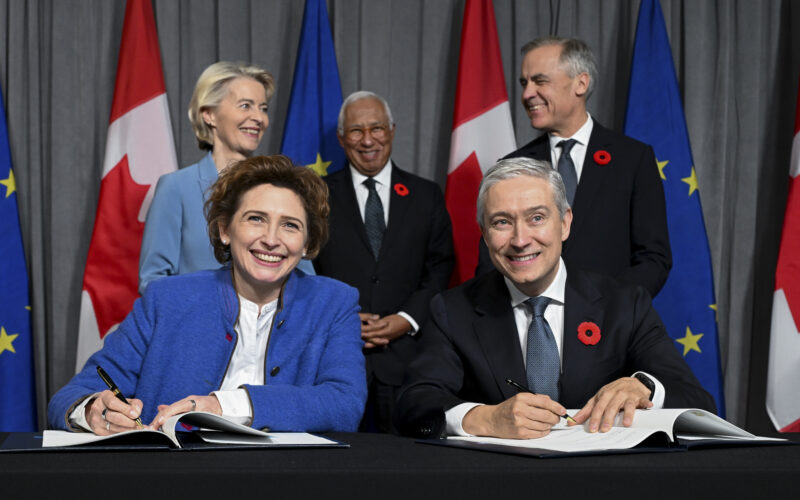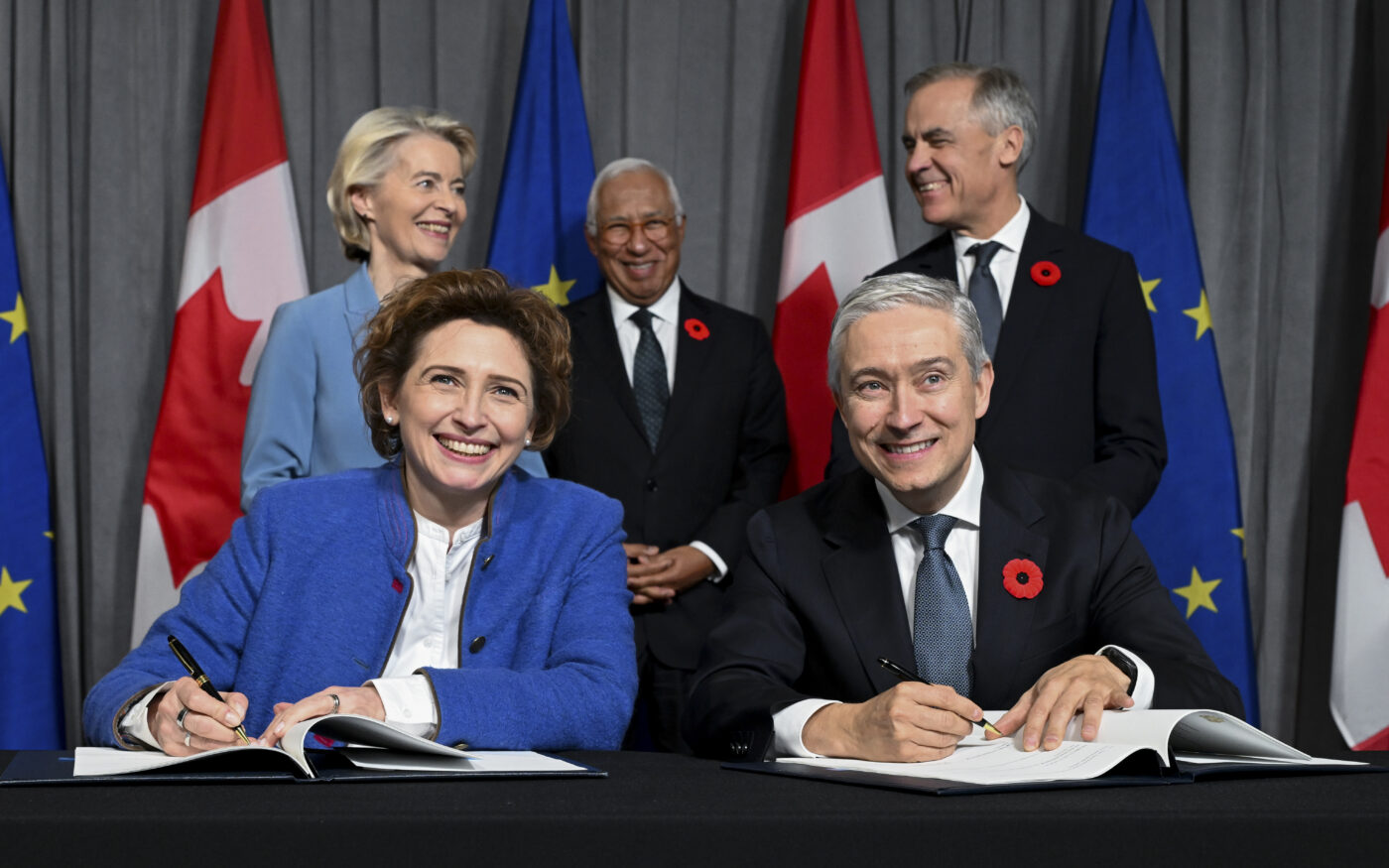
MONTREAL: The European Union and Canada have agreed to forge a closer strategic partnership spanning trade, defence, research and security, European Council President António Costa said on Monday, describing the proposed arrangement as an alliance that would go beyond a conventional association agreement.
Speaking at a press conference following the EU-Canada summit in Montreal, Costa said the two sides had agreed to establish an “Alliance for the Future” aimed at strengthening economic prosperity, enhancing security and deepening political cooperation.

“Our relationship is so special that we want to create something new: to go beyond a simple association, everything short of full EU membership,” Costa said, describing the proposed arrangement as potentially the closest, deepest and most unique association of its kind.
The announcement marks a significant expansion of relations between the two partners, which have steadily strengthened economic and political ties over the past five decades.
Canada and the European Communities signed their first bilateral agreement in 1976, while the Comprehensive Economic and Trade Agreement (CETA) and a Strategic Partnership Agreement, both concluded a decade ago, established a more structured framework for cooperation.
Trade between Canada and the EU has increased by nearly 80% since CETA entered into force, Costa said.
The two sides are now concluding a new digital trade agreement, seeking to boost reciprocal investments, improve mutual recognition of professional qualifications and deepen cooperation on competitiveness and economic security.
The partnership will also focus on six strategic sectors, including critical raw materials, research and innovation, public health, disaster preparedness, youth mobility and closer political and institutional cooperation.
Costa said the EU and Canada would build on Canada’s participation in the Horizon Europe research programme to expand scientific and technological collaboration.
The two sides also intend to make it easier for young people to study and work across the Atlantic through a new Youth Mobility Partnership.
On defence, Costa said cooperation would be strengthened through industrial partnerships and Canada’s participation in the EU’s Security Action for Europe (SAFE) programme, making it the first non-European country to join the initiative.
The EU and Canada are also working together to support Ukraine in its war against Russia, Costa said, welcoming Canadian Prime Minister Mark Carney’s decision to contribute to the Ukraine Support Loan.
He described the move as a strong signal of the two partners’ long-term commitment to supporting Kyiv.
Costa also underlined the importance of closer political coordination at a time when the international rules-based order faces growing pressure.
Carney attended the European Political Community summit in Yerevan in May as the first leader from outside Europe to participate, Costa said. The Canadian prime minister is expected to attend another meeting in Dublin in two weeks.
Costa said European Commission President Ursula von der Leyen and Carney had also agreed to hold a College-to-Government meeting in the spring. He invited the Canadian leader to attend the European Council meeting in June.
The two sides have already demonstrated their commitment to multilateral cooperation through the Partners for Multilateralism initiative, launched jointly during the United Nations General Assembly’s High-Level Week, Costa said.
The initiative has attracted support from other countries seeking to strengthen multilateral institutions, uphold international law and address global challenges.
“Like you, Mark, I believe that our alliance should serve as a beacon for other democracies,” Costa said.
The new partnership reflects a broader effort by Brussels and Ottawa to strengthen cooperation among like-minded democracies amid geopolitical uncertainty, economic competition and growing challenges to the international order.