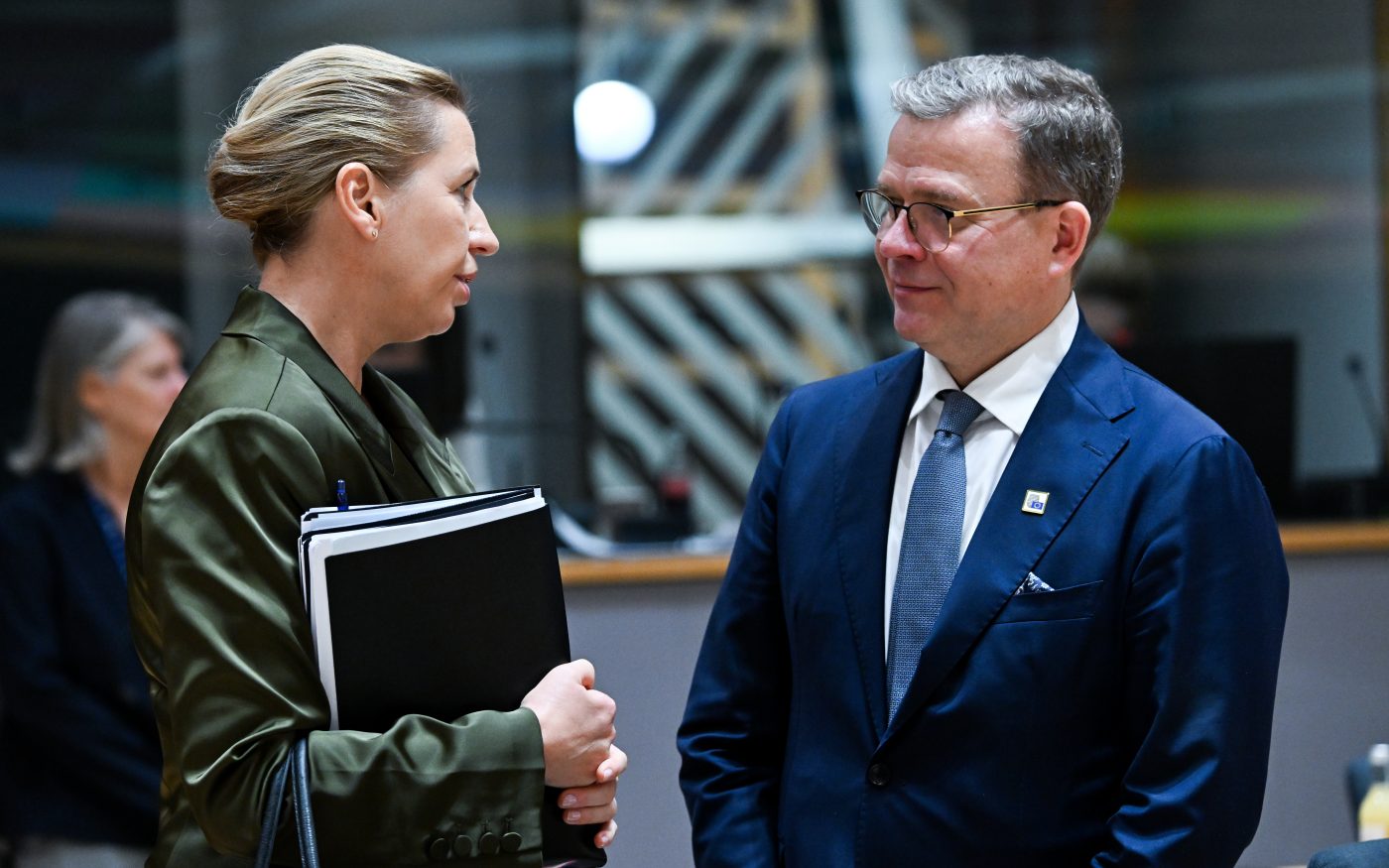
BRUSSELS: Nordic countries Finland and Denmark have called for a smaller European Union budget focused more heavily on defence, competitiveness and emerging strategic challenges, adding to divisions among member states over the bloc’s next long-term financial framework.
Finnish Prime Minister Petteri Orpo said the overall size of the proposed Multiannual Financial Framework (MFF) remained too high, although Finland was prepared to pay more to meet new priorities.
“The overall level is still too high; we are prepared to pay more because of the new priorities,” Orpo said.
The Global Envoy’s Rohan Dua was present at EU Council’s two-day Oct 15-16 summit in Brussels.
He said the EU needed to balance traditional spending on food production and rural areas with investment in defence and competitiveness.
“Balance must be achieved between old priorities (food production) and new priorities,” he said.
Orpo said a proposed reduction of 141 billion had not gone far enough. According to his remarks, the increase in the budget remained 30%, compared with a 40% increase in the European Commission’s proposal.
He said seven countries had met to seek agreement on the budget, but stressed that a solution was needed this year.
For Finland, competitiveness and defence were central to the next budget, alongside continued support for food production and rural communities.
Danish Prime Minister Mette Frederiksen also argued that the proposed budget was too large and did not adequately reflect the EU’s changing priorities.
For Denmark, she said, the key areas were new funding for defence, border protection, competitiveness and tackling migration.
Frederiksen described the negotiations as complex and difficult, saying the next budget was at least as challenging as the previous one.
She also said the budget needed to be more flexible and that Europe had to prepare for a different future.
“Defence is extremely important,” she said, adding that modernising Europe was crucial as the continent faced challenges on multiple fronts.
Frederiksen said the Irish presidency’s proposal did not meet Denmark’s requirements.
“The proposal from Ireland is not acceptable, the budget is too high, and the priorities are wrong,” she said.
A difficult path to agreement
The positions of Finland and Denmark underline the challenge facing EU governments as they try to reconcile traditional spending on agriculture and rural development with demands for greater investment in defence, competitiveness and border security.
Orpo said the EU needed to strike a balance between existing and emerging priorities, while Frederiksen argued that the bloc must modernise its spending to meet future challenges.
Both leaders said an agreement was needed this year, even as the negotiations remained difficult